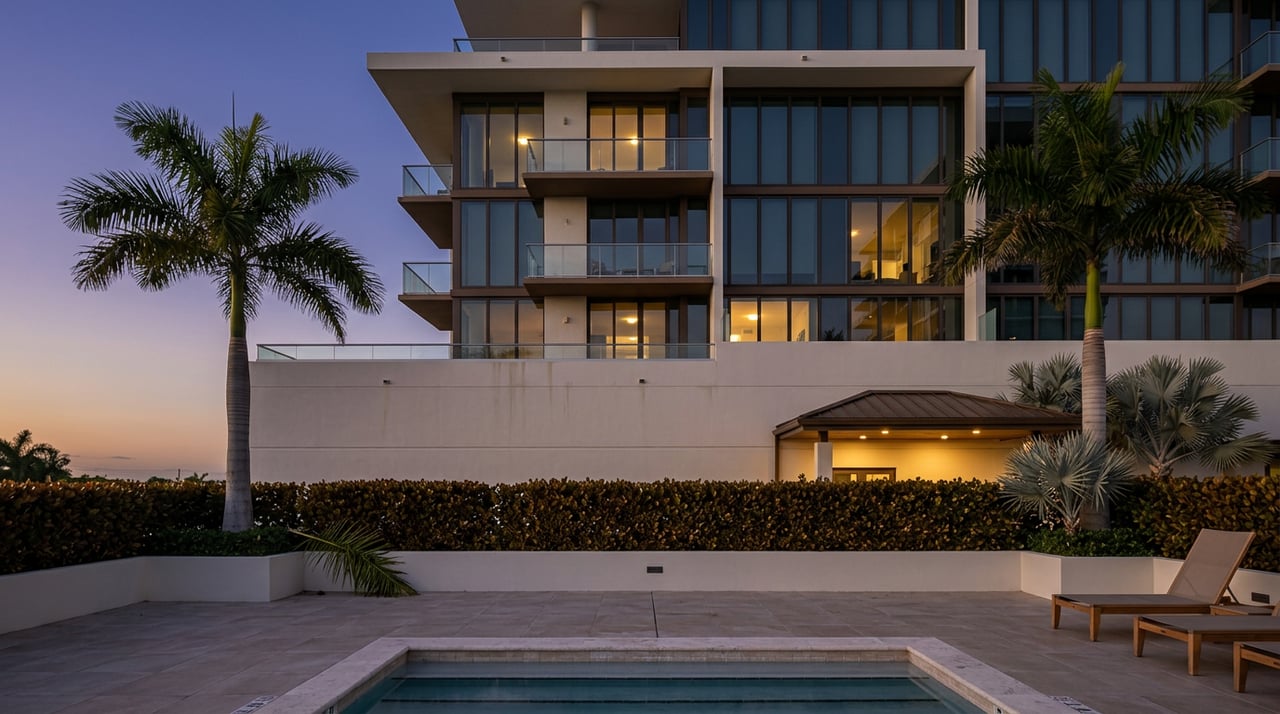
In St. Petersburg, Your Condo's Height Matters More Than Its Age This Year
September 17, 2026
September 17, 2026
Ask a St. Petersburg condo buyer what worries them and most say the same thing: how old is the building. It's a reasonable question. It's also the wrong one to lead with in 2026.
Florida runs two separate clocks on condo buildings, and they don't start at the same time. One is triggered by age. The other is triggered by height, and it doesn't care whether the building was finished in 1974 or 2024. A five-year-old tower going up near Grand Central or along the downtown waterfront is just as obligated to fund a structural reserve as an older building in Old Northeast. If you're shopping or listing a condo here, that distinction is the one worth understanding before you write or accept an offer.
Florida's post-Surfside reforms created two separate requirements, and conflating them is where most buyers get surprised.
| Milestone Inspection | Structural Integrity Reserve Study (SIRS) | |
|---|---|---|
| What triggers it | Building age: 30 years, or 25 years if within three miles of the coast | Building height: three habitable stories or more, regardless of age |
| What it does | A licensed engineer physically inspects for structural deterioration | An engineer projects the funding needed for nine structural components over time |
| Who it exempts | Buildings under three habitable stories | Nothing based on age. A building finished this year still needs one on file |
| Recurrence | Every 10 years after the first inspection | Every 10 years, with reserve funding reviewed annually |
Notice what the SIRS column does not say. There's no age floor. A brand-new three-story building a few blocks from the water needs a Structural Integrity Reserve Study just as much as one of downtown's older waterfront towers. The milestone inspection is about whether the building is currently deteriorating. The SIRS is about whether the association has actually saved enough money to fix what will eventually wear out, and Florida law no longer lets boards vote their way out of funding it.
That non-waivable rule took effect for any association budget adopted on or after January 1, 2026. Before that date, boards could vote to underfund or skip reserve contributions entirely, which is exactly how so many buildings ended up short. After it, the shortfall has to be closed through dues increases, special assessments, or both.
The dollar figures from earlier this year show what happens when decades of underfunding meet a hard deadline. As reported in an industry analysis published in May 2026, HOA fees in the Tampa-St. Petersburg metro rose 17.2% year over year, the steepest increase of any major metro in the country. That's not a national trend landing here incidentally. It's a direct read on how many Tampa Bay associations had been quietly waiving reserve contributions for years.
The financing side is where this gets concrete for a buyer. As of May 2026, more than 1,400 Florida condo buildings were reported to be on Fannie Mae's restricted, non-warrantable list, meaning conventional Fannie Mae or Freddie Mac financing isn't available for units inside them. A building lands on that list for reasons that include a failed or overdue milestone inspection, a reserve fund below the required threshold, or a pending special assessment that materially affects the association's finances. If the building you're considering is on it, you're not choosing between a 30-year fixed and a slightly different rate. You're choosing between a portfolio loan, a non-QM product, or jumbo financing, usually at a higher rate with different qualification standards than what you budgeted for when you started looking.
There's a transparency rule working in the buyer's favor here, too. Since January 1, 2026, associations with 25 or more units have been required to post governing documents, budgets, and reserve studies to a website or app under a separate transparency law. That means the documents that used to require a formal written request and a wait can often be pulled before you ever write an offer.
This is where the age-versus-height distinction stops being an abstraction and starts changing how you'd actually shop different parts of the city.
Old Northeast and Kenwood are known for historic charm and walkability, and older condo buildings folded into that housing stock are the ones most likely to already be inside or approaching the milestone inspection window. Along the coast, that window opens five years earlier than it does inland, at 25 years instead of 30, which pulls the deadline forward for waterfront buildings that might otherwise feel newer than they are.
Newer downtown construction doesn't get a pass just because it skips the milestone inspection for another two decades. Any three-story-or-taller building near the downtown core, including new residential product tied to the planned redevelopment of the Tropicana Field site, still needs a current SIRS on file. Downtown luxury towers marketed under names like Waldorf Astoria, Art House, and 400 Central are subject to the same height-based SIRS requirement as a building half their age. A five-year-old tower with a thin reserve fund carries real financial exposure even though it would sail through a milestone inspection with no findings at all.
That's the piece that gets missed when buyers filter by "built after 2015" as a shortcut for lower risk. It filters out milestone inspection exposure. It does nothing for reserve exposure.
Before you write an offer on a St. Petersburg condo three stories or taller, request three things in writing, regardless of how new the building looks:
If the association has 25 or more units, start by checking whether these are already posted to its website or app before you submit a formal request. If they're not posted and the building should be covered by that rule, that's worth asking about directly.
The market conditions right now favor sellers who get ahead of this rather than let a buyer's inspection period surface it. As of July 2026, Pinellas County's median days on market ran 80, up from 76 the month before, with roughly 6,940 active listings countywide in June. Median listing price per square foot slipped to $302 in July 2026, down from $312 a year earlier. Condo and townhouse inventory had climbed toward 13 months of supply heading into 2026, solidly buyer's market territory.
In that environment, a condo seller who can hand a buyer's agent a completed SIRS, a clean milestone inspection record, and a documented funding plan is negotiating from a different position than one who can't. If your building has a pending special assessment, disclosing it clearly in the listing rather than letting it surface during due diligence keeps a motivated buyer at the table instead of walking days before closing.
Does a brand-new condo building skip these requirements entirely? No. The milestone inspection is age-triggered and won't apply to a new building for decades. The SIRS is height-triggered and applies as soon as the building is three habitable stories or taller, no matter when it was built.
What actually happens if a building lands on Fannie Mae's restricted list? Conventional financing becomes unavailable for units in that building. Buyers typically shift to portfolio loans, non-QM products, or jumbo financing, generally at higher rates and with different qualification requirements than standard financing.
Can an association still vote to underfund its reserves to keep dues low? Not for budgets adopted on or after January 1, 2026. That option, used for decades to keep monthly dues artificially low, is no longer legal for the structural components covered by SIRS.
If you're weighing a condo purchase or getting ready to list one in St. Petersburg, the documents matter more than the finish date on the building permit. Elite Choice Home Group works these questions into every condo showing and every listing conversation across Pinellas County, because the answer changes what the deal actually costs. Get Your Instant Home Valuation and let's talk through what your specific building's paperwork says before you make your next move.
Stay up to date on the latest real estate trends.
Our clients commend us on our knowledge of real estate, negotiation skills, and our commitment to our clients, which allow us to make the transaction process less stressful.
13029 W LINEBAUGH AVE STE 101 TAMPA FL 33626